


'%20clip-path='url(%23master_svg0_435_106539/302_155699)'%3e%3cg%20transform='matrix(0,1,1,0,-10,10)'%3e%3cpath%20d='M4.64651757818006,15.35348295818006Q4.57620548818006,15.283170878180059,4.538152908180059,15.19130372818006Q4.500100258180059,15.09943655918006,4.500100258180059,15.00000026818006Q4.500100288180059,14.950764414180059,4.50970571818006,14.90247461918006Q4.519311158180059,14.854184818180059,4.538152908180059,14.80869683818006Q4.556994648180059,14.76320883818006,4.5843486181800595,14.72227072818006Q4.6117025881800595,14.68133261818006,4.646517608180059,14.64651760818006Q4.681332618180059,14.611702588180059,4.722270728180059,14.58434864818006Q4.763208838180059,14.55699467818006,4.80869683818006,14.53815292818006Q4.85418481818006,14.51931115818006,4.90247461918006,14.50970571818006Q4.9507644141800595,14.50010028818006,5.0000002681800595,14.50010025818006Q5.0994365591800594,14.50010025818006,5.19130372818006,14.53815290818006Q5.2831708781800595,14.57620548818006,5.353482958180059,14.64651757818006L5.35355364818006,14.64644688818006L8.00000026818006,17.29289366818006L10.64644696818006,14.64644688818006L10.646517568180059,14.64651757818006Q10.71682956818006,14.57620548818006,10.808696968180058,14.53815290818006Q10.90056446818006,14.50010025818006,11.00000026818006,14.50010025818006Q11.049235568180059,14.50010028818006,11.09752536818006,14.50970571818006Q11.14581516818006,14.51931115818006,11.19130356818006,14.53815290818006Q11.236791368180059,14.55699464818006,11.277729768180059,14.58434861818006Q11.318667668180058,14.611702588180059,11.35348296818006,14.64651760818006Q11.388298268180058,14.68133261818006,11.415652068180059,14.72227072818006Q11.443005868180059,14.76320883818006,11.461847568180058,14.80869683818006Q11.48068926818006,14.854184818180059,11.49029476818006,14.90247461918006Q11.499900168180059,14.950764414180059,11.499900168180059,15.00000026818006Q11.49989966818006,15.09943664118006,11.461846668180058,15.191303868180059Q11.42379406818006,15.28317108818006,11.35348246818006,15.35348319818006L11.353553068180059,15.353553648180059L8.35355356818006,18.35355356818006Q8.283227468180058,18.42387966818006,8.191341868180059,18.46193986818006Q8.099456068180059,18.50000006818006,8.000000068180059,18.50000006818006Q7.9005439681800596,18.50000006818006,7.80865836818006,18.46193986818006Q7.71677286818006,18.42387966818006,7.64644696818006,18.35355356818006L4.646446888180059,15.353553648180059L4.64651757818006,15.35348295818006Z'%20fill-rule='evenodd'%20fill='%23A0A2A2'%20fill-opacity='1'%20style='mix-blend-mode:passthrough'/%3e%3c/g%3e%3c/g%3e%3c/svg%3e)
'%3e%3cg%20transform='matrix(0,-1,1,0,-4,14)'%3e%3cpath%20d='M4.57582074,9.42417926Q4.49144626,9.33980477,4.44578308,9.22956416Q4.40011996,9.11932355,4.40011996,9Q4.40012002,8.940916978,4.41164654,8.88296923Q4.42317307,8.82502148,4.4457832,8.77043588Q4.46839327,8.71585029,4.50121802,8.66672456Q4.53404278,8.61759883,4.5758208,8.5758208Q4.61759883,8.53404278,4.6667245600000005,8.50121802Q4.71585029,8.46839321,4.77043588,8.44578314Q4.82502148,8.42317307,4.88296923,8.41164649Q4.940916978,8.40012002,5,8.40011996Q5.11932355,8.40011996,5.22956416,8.44578314Q5.33980477,8.49144626,5.42417926,8.57582074L5.4242640699999995,8.57573593L8,11.1514719L10.575736,8.57573593L10.5758209,8.57582062Q10.6601949,8.4914462,10.770435299999999,8.44578314Q10.880676300000001,8.40012002,11,8.40011996Q11.059083000000001,8.40012002,11.117030100000001,8.41164654Q11.1749778,8.42317307,11.229563200000001,8.4457832Q11.2841492,8.46839327,11.3332748,8.50121802Q11.3824005,8.53404278,11.4241791,8.5758208Q11.4659567,8.61759883,11.4987817,8.66672456Q11.531606700000001,8.71585029,11.5542164,8.77043588Q11.5768266,8.82502148,11.5883532,8.88296923Q11.599880200000001,8.940916978,11.599880200000001,9Q11.599880200000001,9.1193236,11.5542164,9.22956422Q11.5085535,9.33980486,11.4241791,9.42417938L11.424264,9.42426407L8.424264,12.424264Q8.3398728,12.508655300000001,8.229610000000001,12.5543277Q8.1193473,12.5999999,7.999999799999999,12.5999999Q7.8806524,12.5999999,7.7703898,12.5543275Q7.6601272,12.5086551,7.5757358,12.424264L4.5757359300000005,9.42426407L4.57582074,9.42417926Z'%20fill-rule='evenodd'%20fill='%23000000'%20fill-opacity='1'/%3e%3c/g%3e%3c/g%3e%3c/svg%3e)
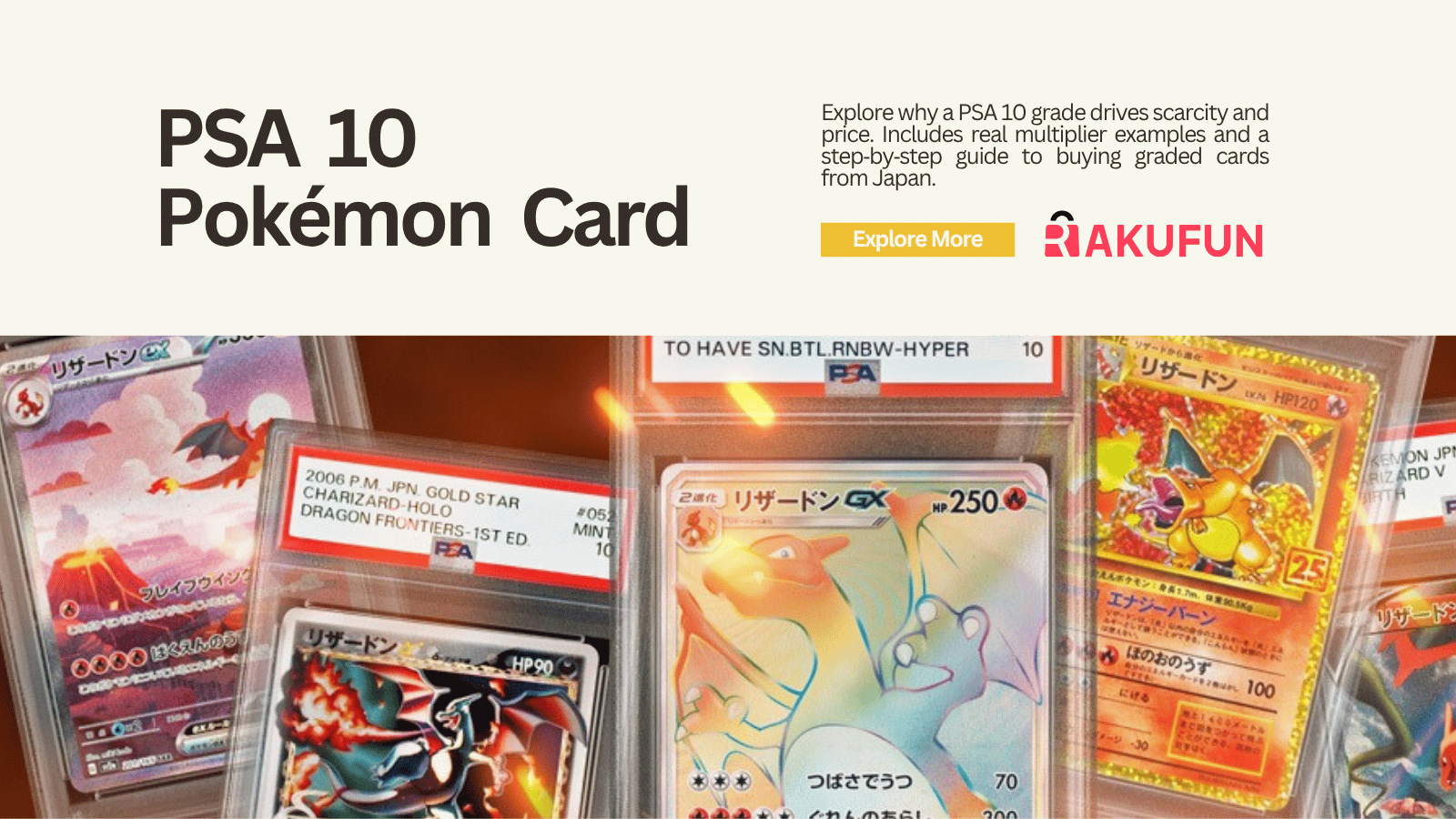
If you have spent any time in the Pokémon TCG community, you have almost certainly heard the term “PSA 10.” It appears in auction listings, YouTube videos, and collector forums as the gold standard of card condition. But what does it actually mean? And why does a single grade number make such a dramatic difference in how much a card is worth?
This guide explains what a PSA 10 is, how PSA grading works, why collectors prize it so highly, and—most importantly—how you can buy authentic PSA 10 Pokémon cards directly from Japan via Rakufun proxy service.
Table of Contents
- What Is PSA?
- What Is a PSA 10? The Definition
- What Does PSA Look For? The Four Key Criteria
- Why Is a PSA 10 So Valuable?
- The Price Gap: PSA 10 vs. PSA 9 vs. Raw
- When Does Grading Make Financial Sense?
- PSA 10 vs. Other Grading Companies: PSA, BGS, and CGC
- How to Buy PSA 10 Pokémon Cards from Japan with Rakufun
- Final Thoughts
What Is PSA?
PSA stands for Professional Sports Authenticator. It is a third-party service that examines trading cards, grades their condition on a 1–10 scale, and seals them in a tamper-proof plastic slab with a unique certification number. Since its founding in 1991, PSA has become the most recognized and trusted grading company in the collectibles industry. A PSA-graded card provides three things that raw (ungraded) cards cannot guarantee: authenticity, condition, and long-term preservation.
For a deeper understanding of the grading process, you can also explore how other companies like BGS and CGC evaluate Pokémon cards. But for now, when collectors say “Gem Mint,” they are referring to the highest possible grade: a PSA 10. This article will focus on PSA because it remains the most trusted and liquid brand for graded Pokémon cards at the top of the market.
What Is a PSA 10? The Definition
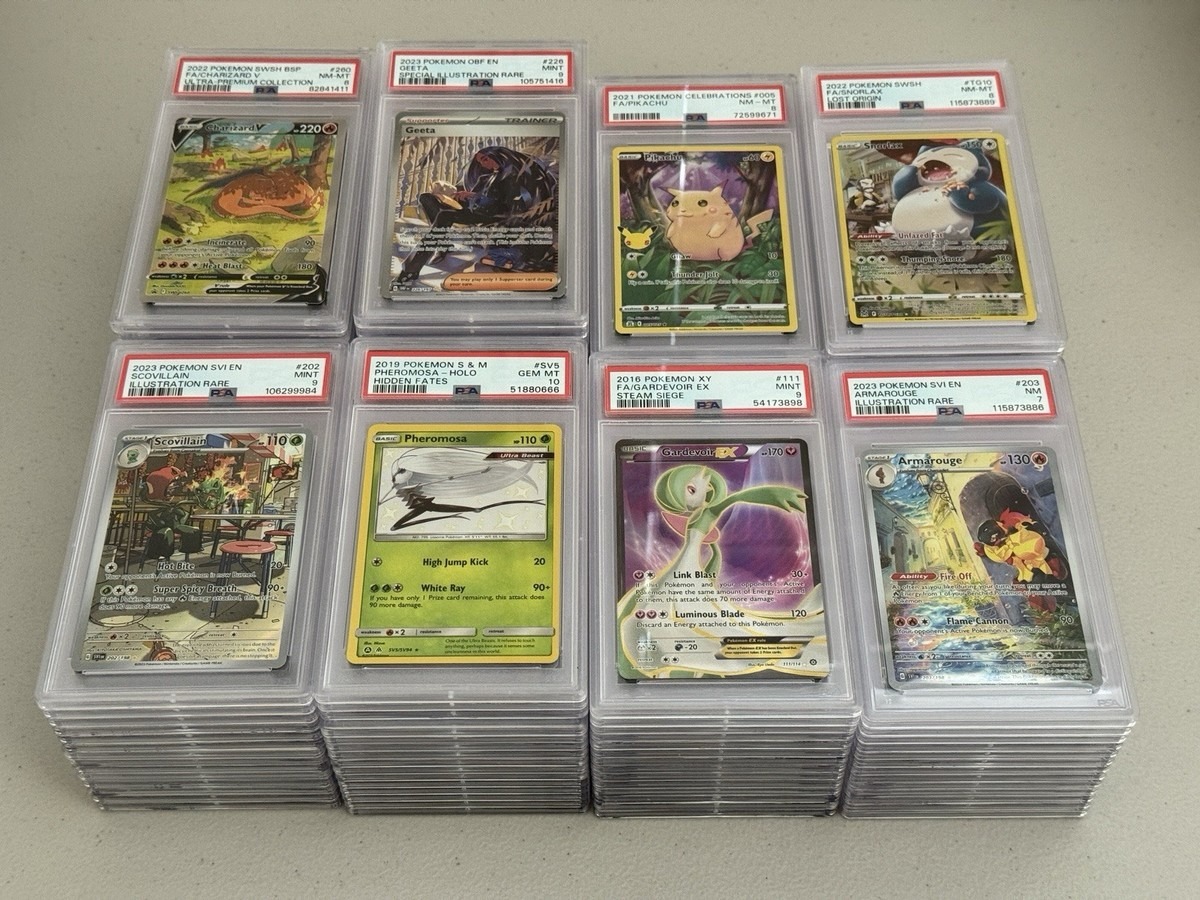
A PSA 10 is officially described as “Gem Mint.” It is the highest grade a card can receive. According to PSA’s official standards, a PSA Gem Mint 10 card is a virtually perfect card. Attributes include four perfectly sharp corners, sharp focus, and full original gloss. A PSA 10 card must be free of staining of any kind, although an allowance may be made for a slight printing imperfection if it does not impair the card’s overall appeal.
In practice, this means a PSA 10 card looks as close to “fresh out of the pack” as humanly possible. The centering must be nearly 50/50 on both front and back. The corners must be sharp with no white showing, and the edges must be clean.
To put this in perspective, a PSA 9 is classified as “Mint,” which is still an excellent grade. However, the difference between a 9 and a 10 is often microscopic: a barely visible centering shift, a corner that is 99% perfect instead of 100%, or a tiny surface imperfection invisible to the naked eye. But in the collectibles market, that tiny difference amounts to a massive disparity in price.
Achieving a PSA 10 is genuinely rare. Even cards fresh from a booster pack rarely receive a Grade 10 because of minor imperfections introduced during the manufacturing process itself. For this reason, PSA 10 copies of desirable cards are significantly rarer than PSA 9 copies, which is the fundamental driver of their value.
What Does PSA Look For? The Four Key Criteria
PSA’s graders analyze every card using the following four criteria:
| Criterion | Description |
| Centering | The borders on the front of the card must be nearly perfectly symmetrical (approximately 50/50). Any shift left/right or up/down can reduce the grade. |
| Corners | All four corners must be razor‑sharp, with no whitening, fraying, or softness. Even a tiny “ding” can drop a card to a 9. |
| Edges | The side cuts must be clean and free of chipping, rough spots, or discoloration. |
| Surface | The card’s surface must be free of scratches, print lines, scratches, roller marks or staining. For holographic cards, the foil must be fully intact and glossy. |
PSA uses precise machinery capable of detecting details that cannot be seen by the human eye. A card can look immaculate under casual inspection and still fail to achieve a 10 because of a tiny printing flaw only visible under magnification.
PSA Grading Scale Overview
| Grade | Description | Key Attributes |
| 10 | Gem Mint | Virtually perfect on all four criteria; slight printing imperfection may be allowed |
| 9 | Mint | Minor imperfections visible upon close inspection; retains excellent eye appeal |
| 8 | Near Mint–Mint | Slight wear on corners or edges; small scratches may appear under light |
| 7 | Near Mint | Slight surface wear visible only upon close inspection |
| 6–1 | Excellent to Poor | Progressive wear: edge fraying, scratches, creases, or major damage |
Why Is a PSA 10 So Valuable?
There are three reasons a PSA 10 commands such high prices.
-
True Scarcity
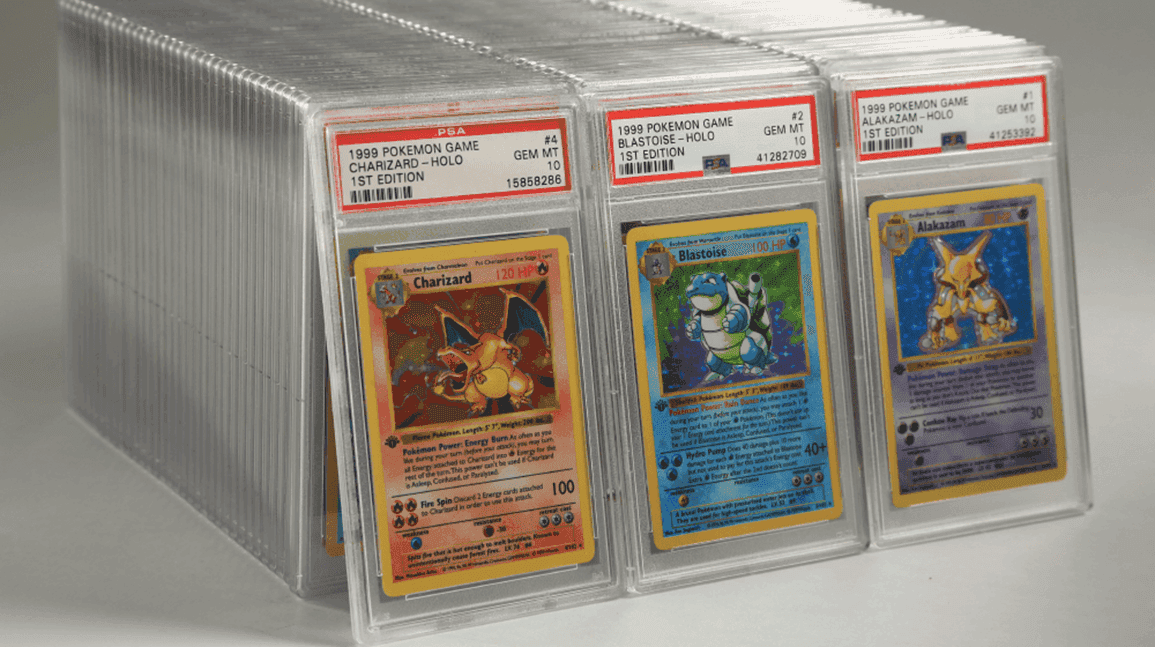
For most Pokémon cards—especially vintage ones—PSA 10 copies are significantly rarer than PSA 9 copies. Take the Base Set 1st Edition Charizard. Hundreds of thousands were printed, but the PSA population report shows a relatively small number have achieved Gem Mint status. The vast majority grade 7–9 because of manufacturing variances, handling, and the passage of time. A PSA 10 represents the best of the best—the copies that managed to stay perfect for decades.
-
The “Perfect” Label
There is an emotional premium attached to the number 10. It is the top, the maximum, the “perfect” label. Collectors and investors want the best available grade, and owning the highest possible version of a card carries a prestige that a 9 does not. For a card you intend to display or keep as a centerpiece, that feeling of perfection matters.
-
Investment Appeal
The investment community gravitates toward PSA 10s for desirable cards because they are the most scarce and most resistant to downward price pressure. When the market drops, PSA 10s of iconic cards tend to hold their value better than lower grades, because supply is so limited. This narrative becomes self-reinforcing: people buy PSA 10s because they believe they will hold value, which creates more demand, which supports the price.
The economic impact of this is best illustrated by the highest-graded copy of the Pikachu Illustrator card, which sold for $16.49 million in 2026—making it the most expensive trading card ever sold. While this is an extreme outlier, it demonstrates how a PSA 10 label can elevate a rare card to the highest echelons of collectible value.
| Card | Grade | Sale Price | Year |
| Pikachu Illustrator (Japanese Promo) | PSA 10 | $16,492,000 | 2026 |
| 1st Edition Base Set Charizard (Shadowless) | PSA 10 | $420,000 | 2021 |
| Japanese Promo Silver Second Trophy Pikachu | PSA 10 | $444,000 | 2022 |
The Price Gap: PSA 10 vs. PSA 9 vs. Raw
The difference between a PSA 10 and a PSA 9 can be staggering, even though the two cards may appear almost identical to the naked eye. It is not unusual for a PSA 10 to sell for 2x, 5x, or even 20x or more than a PSA 9 of the same card.
Here are some real-world examples of how dramatically grading multiplies value:
| Card | Condition A / Raw Price | PSA 10 Price | Multiplier |
| MEGA Gengar ex | ¥1,318 | ¥25,400 | 19.27x |
| MEGA Gardevoir ex SR | ¥1,223 | ¥15,000 | 12.26x |
| Marshadow AR | ¥1,186 | ¥13,911 | 11.73x |
| Riolu P | ¥1,085 | ¥12,500 | 11.52x |
| Cassiopeia SR | ¥1,000 | ¥11,111 | 11.11x |
Data based on SNKRDUNK transaction data from January–September 2025
As the table above shows, a card worth around ¥1,000 raw can jump to over ten times that price once slabbed as a PSA 10. The multiplier is even higher for popular characters, iconic art, and cards with low PSA 10 populations.
For vintage cards, premiums can be even larger. Some vintage PSA 10s command 2,400%+ increases over raw values in extreme cases, while modern chase cards typically see 2–5x premiums.
When Does Grading Make Financial Sense?
While owning a PSA 10 is desirable, not every card is worth grading. Submitting a single card to PSA costs roughly $19–$300+ (depending on service level), plus shipping, insurance, and supplies—bringing the all‑in cost to around $60 per card. For a raw card valued below $10, the grading cost may exceed any potential value increase.
A good rule of thumb is the $100 Threshold: cards valued above $100 in raw condition that appear Near Mint or better typically see value increases of 120–300% when achieving PSA 10 status. Cards below $10 rarely see more than 70% increases and often fail to cover grading costs entirely.
Cards that tend to be worth grading include:
- Vintage cards (pre-2003) with strong character popularity (Charizard, Pikachu, Mew, Mewtwo)
- Modern Secret Rares and high-demand promo cards
- Cards from iconic sets, such as Pokémon Card 151 or High Class Packs
- Cards with low PSA 10 populations (check PSA’s population report)
PSA 10 vs. Other Grading Companies: PSA, BGS, and CGC
While PSA is the most recognized grader, it is not the only option. Beckett Grading Services (BGS) and Certified Guaranty Company (CGC) also provide reliable grading. However, for resale value, PSA consistently leads the market. For modern cards at a grade of 10, PSA typically sells for 18–29% more than CGC, a meaningful premium for serious investors. BGS has its own appeal with sub‑grades (focusing on centering, corners, edges, and surface) and their fabled “Black Label” (a perfect 10 in all four categories), but BGS 10 Black Labels are significantly rarer than PSA 10 slabs, making them the ultimate collectible for condition purists. For Japanese Pokémon cards specifically, PSA remains the most trusted and liquid option for buyers around the world. Nonetheless, your choice of company should align with your goals: PSA for liquidity and long-term value, or BGS/CGC for finer technical distinctions and potentially higher upside on ultra-high-grade examples.
How to Buy PSA 10 Pokémon Cards from Japan with Rakufun
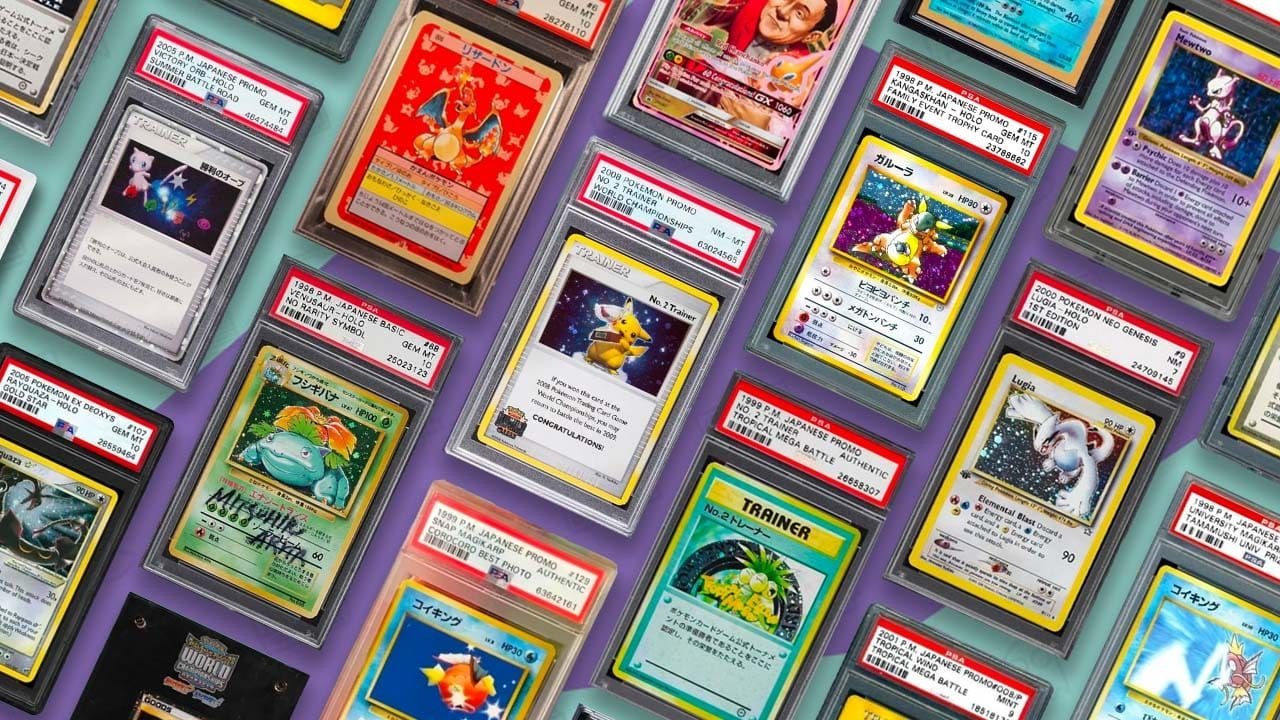
Japan’s domestic marketplaces are some of the best sources in the world for PSA 10 Pokémon cards. Sites like Mercari, Rakuma, JDirectItems Auction(Yahoo! Japan Auctions), Surugaya, and Magi feature thousands of graded slabs, often at lower prices than international marketplaces.
Rakufun is a proxy shopping platform available as both a website and a mobile app. It partners with dozens of Japanese sites and offers features that make buying PSA 10 cards safe, simple, and cost‑effective.
Step 1: Find Your Card
You can search directly within Rakufun’s integrated platforms (Mercari, Rakuma, Surugaya, Magi, etc.) using English or Japanese keywords, or use the Link2Buy tool to paste the URL from any Japanese website. For accurate results on graded slabs, include “PSA 10” in your search.
Step 2: Place Your Order
Once you have confirmed the card, add it to your cart and proceed to checkout. Rakufun charges 0% purchasing fees—you pay only for the item and shipping. Domestically, the seller ships the card to Rakufun’s warehouse. If you find a PSA 10 card, note its certification number from the slab. You can verify this on PSA’s official website for free. Rakufun’s optional Photo Verification service also allows you to request detailed images of the actual slab before shipping, giving you peace of mind about condition.
Step 3: Consolidate Multiple Purchases
Rakufun offers free warehouse storage for up to 90 days. This means you can buy several PSA 10 cards from different sellers over time, wait for them to arrive, and then combine everything into one package. Consolidation dramatically reduces international shipping costs compared to sending each slab separately.
Step 4: Choose International Shipping
When you are ready, select your preferred shipping method: DHL, EMS. Rakufun professionally repacks your cards to ensure they are secure for the journey. You receive a tracking number and can monitor your package all the way to your doorstep.
Final Thoughts
A PSA 10 is more than just a high grade. It is a certification of perfection that unlocks scarcity, prestige, and long‑term value. For collectors, a PSA 10 card represents the finest version of a card you can own—the copy that survived manufacturing, handling, and decades of storage in flawless condition.
Whether you are hunting for a vintage Base Set Charizard or a modern Secret Rare, the Japanese secondary market offers some of the best opportunities to acquire PSA 10 cards at fair prices. With Rakufun, the process is straightforward: search, verify, purchase, consolidate, and ship. No Japanese address is required, and the platform’s 0% purchasing fee means you pay only for the cards you fall in love with.