


'%20clip-path='url(%23master_svg0_435_106539/302_155699)'%3e%3cg%20transform='matrix(0,1,1,0,-10,10)'%3e%3cpath%20d='M4.64651757818006,15.35348295818006Q4.57620548818006,15.283170878180059,4.538152908180059,15.19130372818006Q4.500100258180059,15.09943655918006,4.500100258180059,15.00000026818006Q4.500100288180059,14.950764414180059,4.50970571818006,14.90247461918006Q4.519311158180059,14.854184818180059,4.538152908180059,14.80869683818006Q4.556994648180059,14.76320883818006,4.5843486181800595,14.72227072818006Q4.6117025881800595,14.68133261818006,4.646517608180059,14.64651760818006Q4.681332618180059,14.611702588180059,4.722270728180059,14.58434864818006Q4.763208838180059,14.55699467818006,4.80869683818006,14.53815292818006Q4.85418481818006,14.51931115818006,4.90247461918006,14.50970571818006Q4.9507644141800595,14.50010028818006,5.0000002681800595,14.50010025818006Q5.0994365591800594,14.50010025818006,5.19130372818006,14.53815290818006Q5.2831708781800595,14.57620548818006,5.353482958180059,14.64651757818006L5.35355364818006,14.64644688818006L8.00000026818006,17.29289366818006L10.64644696818006,14.64644688818006L10.646517568180059,14.64651757818006Q10.71682956818006,14.57620548818006,10.808696968180058,14.53815290818006Q10.90056446818006,14.50010025818006,11.00000026818006,14.50010025818006Q11.049235568180059,14.50010028818006,11.09752536818006,14.50970571818006Q11.14581516818006,14.51931115818006,11.19130356818006,14.53815290818006Q11.236791368180059,14.55699464818006,11.277729768180059,14.58434861818006Q11.318667668180058,14.611702588180059,11.35348296818006,14.64651760818006Q11.388298268180058,14.68133261818006,11.415652068180059,14.72227072818006Q11.443005868180059,14.76320883818006,11.461847568180058,14.80869683818006Q11.48068926818006,14.854184818180059,11.49029476818006,14.90247461918006Q11.499900168180059,14.950764414180059,11.499900168180059,15.00000026818006Q11.49989966818006,15.09943664118006,11.461846668180058,15.191303868180059Q11.42379406818006,15.28317108818006,11.35348246818006,15.35348319818006L11.353553068180059,15.353553648180059L8.35355356818006,18.35355356818006Q8.283227468180058,18.42387966818006,8.191341868180059,18.46193986818006Q8.099456068180059,18.50000006818006,8.000000068180059,18.50000006818006Q7.9005439681800596,18.50000006818006,7.80865836818006,18.46193986818006Q7.71677286818006,18.42387966818006,7.64644696818006,18.35355356818006L4.646446888180059,15.353553648180059L4.64651757818006,15.35348295818006Z'%20fill-rule='evenodd'%20fill='%23A0A2A2'%20fill-opacity='1'%20style='mix-blend-mode:passthrough'/%3e%3c/g%3e%3c/g%3e%3c/svg%3e)
'%3e%3cg%20transform='matrix(0,-1,1,0,-4,14)'%3e%3cpath%20d='M4.57582074,9.42417926Q4.49144626,9.33980477,4.44578308,9.22956416Q4.40011996,9.11932355,4.40011996,9Q4.40012002,8.940916978,4.41164654,8.88296923Q4.42317307,8.82502148,4.4457832,8.77043588Q4.46839327,8.71585029,4.50121802,8.66672456Q4.53404278,8.61759883,4.5758208,8.5758208Q4.61759883,8.53404278,4.6667245600000005,8.50121802Q4.71585029,8.46839321,4.77043588,8.44578314Q4.82502148,8.42317307,4.88296923,8.41164649Q4.940916978,8.40012002,5,8.40011996Q5.11932355,8.40011996,5.22956416,8.44578314Q5.33980477,8.49144626,5.42417926,8.57582074L5.4242640699999995,8.57573593L8,11.1514719L10.575736,8.57573593L10.5758209,8.57582062Q10.6601949,8.4914462,10.770435299999999,8.44578314Q10.880676300000001,8.40012002,11,8.40011996Q11.059083000000001,8.40012002,11.117030100000001,8.41164654Q11.1749778,8.42317307,11.229563200000001,8.4457832Q11.2841492,8.46839327,11.3332748,8.50121802Q11.3824005,8.53404278,11.4241791,8.5758208Q11.4659567,8.61759883,11.4987817,8.66672456Q11.531606700000001,8.71585029,11.5542164,8.77043588Q11.5768266,8.82502148,11.5883532,8.88296923Q11.599880200000001,8.940916978,11.599880200000001,9Q11.599880200000001,9.1193236,11.5542164,9.22956422Q11.5085535,9.33980486,11.4241791,9.42417938L11.424264,9.42426407L8.424264,12.424264Q8.3398728,12.508655300000001,8.229610000000001,12.5543277Q8.1193473,12.5999999,7.999999799999999,12.5999999Q7.8806524,12.5999999,7.7703898,12.5543275Q7.6601272,12.5086551,7.5757358,12.424264L4.5757359300000005,9.42426407L4.57582074,9.42417926Z'%20fill-rule='evenodd'%20fill='%23000000'%20fill-opacity='1'/%3e%3c/g%3e%3c/g%3e%3c/svg%3e)
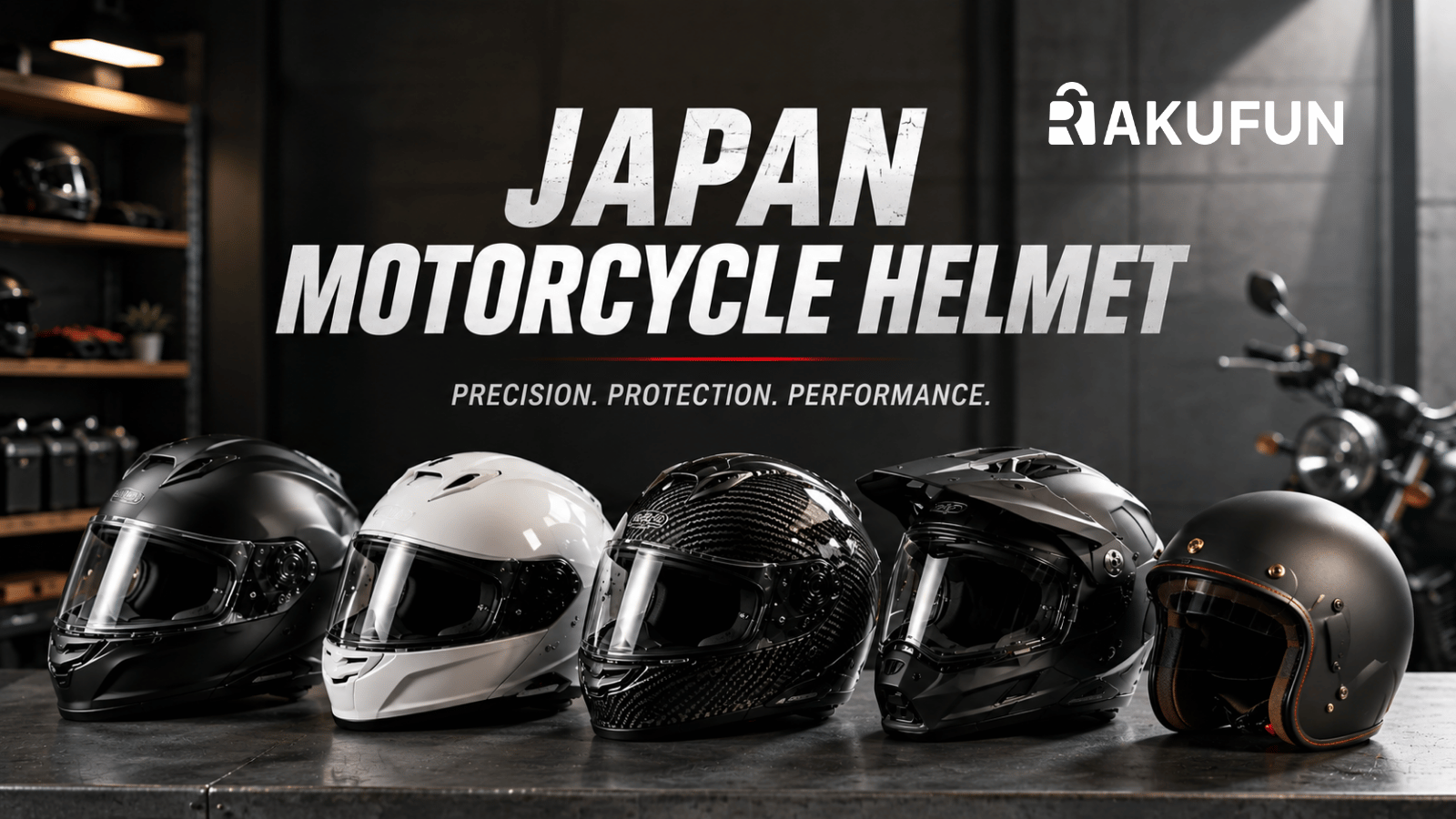
Japanese motorcycle helmets are widely regarded as among the best in the world. Brands like Shoei and Arai have built decades-long reputations for exceptional build quality, advanced safety engineering, and thoughtful rider-focused design. For many motorcyclists, owning a helmet made in Japan is not just about protection—it is about owning a piece of precision craftsmanship.
This guide explores the leading Japanese helmet manufacturers, highlights their most important models, explains safety certifications and sizing differences, and walks you through how to purchase these helmets directly from Japan using Rakufun, a proxy shopping platform.
Table of Contents
- Why Japanese Helmets Stand Out
- Leading Japanese Helmet Brands
- Safety Certifications: What You Need to Know
- Sizing and Fit: JDM vs. International Models
- Tips for Buying a Helmet from Japan
- Frequently Asked Questions (FAQ)
- How to Buy Japanese Helmets with Rakufun
- Final Thoughts
Why Japanese Helmets Stand Out
Japanese helmet manufacturers are obsessive about detail. They use proprietary composite shell constructions such as Shoei's AIM+ (Advanced Integrated Matrix Plus Multi-Fiber) and Arai's PB e-clc (Peripherally Belted e-Complex Laminate Construction) to balance strength, flexibility, and weight. Multi-density EPS liners are carefully engineered to absorb impact energy across different zones of the helmet, reducing the force transferred to your head.
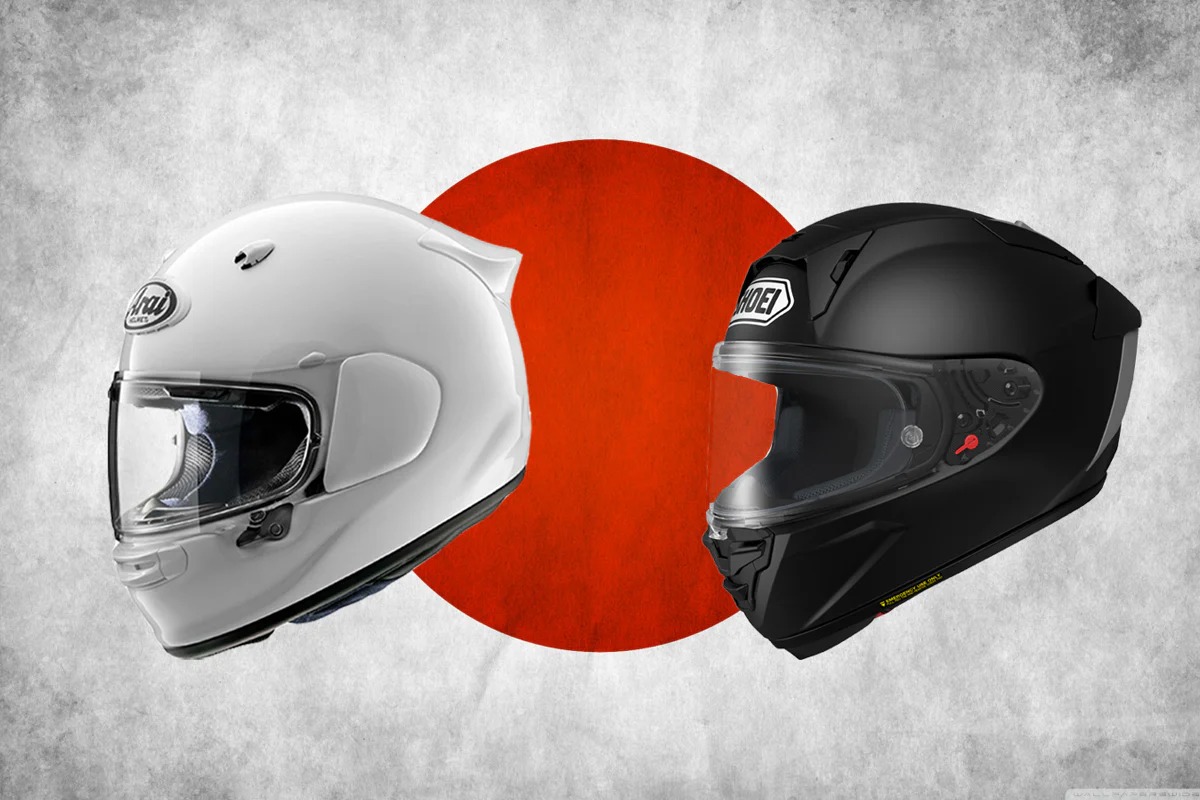
Ventilation systems are another area where Japanese brands excel. The latest models, from Shoei's revised Hornet ADV 06 to Arai's new X-SNC, feature redesigned intake and exhaust ports that channel airflow efficiently without creating excessive noise or turbulence. These are helmets built for riders who spend hours in the saddle, whether commuting through city traffic or carving mountain passes on the weekend.
Leading Japanese Helmet Brands
Shoei: Innovation Across Every Segment
Shoei is one of Japan's largest and most recognizable helmet manufacturers. The company produces helmets for virtually every riding style, from track-focused race lids to adventure touring models and open-face retro designs. Shoei's commitment to meeting the latest safety standards, including the stringent ECE 22.06 regulation, has kept it at the forefront of the industry.
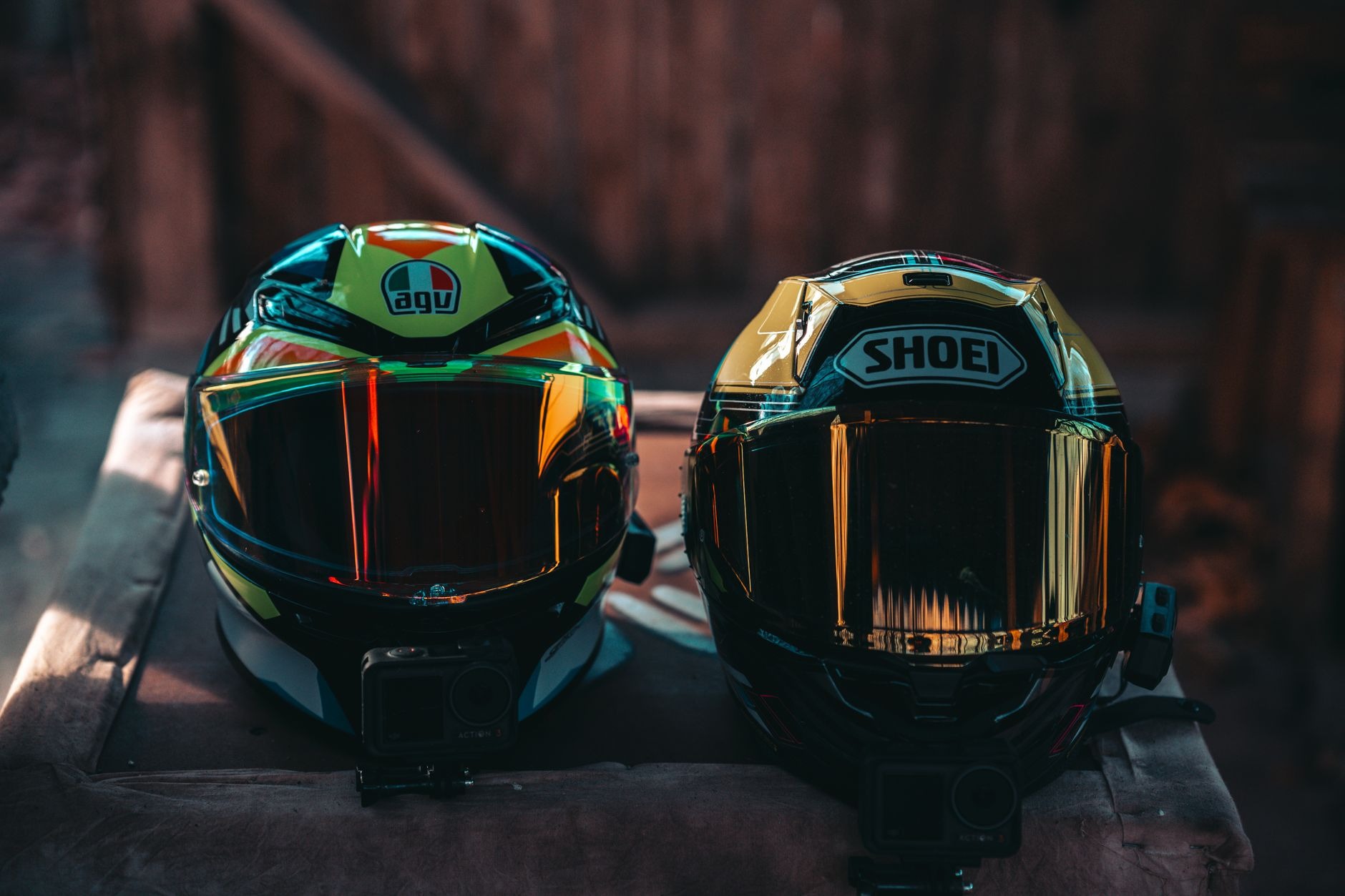
X-SPR Pro / X-Fifteen – Shoei's flagship full-face racing helmet, worn by MotoGP riders and serious track-day enthusiasts. A new FIM 02-approved version of the X-SPR Pro was previewed at EICMA and is expected in early 2026. The X-Fifteen also receives limited-edition replica graphics honoring legendary riders like Wayne Gardner, Eddie Lawson, Marc Marquez, and Toprak Razgatlioglu.
GT-Air 3 – Widely considered one of the best sports-touring helmets on the market. Updated to ECE 22.06 standards, it underwent a complete redesign. MCN Editor Richard Newland, who has covered over 9,000 miles in the GT-Air 3, praised its superb build quality, effective venting, and minimal wind noise. Shoei also previewed the GT-Air 3 Smart with an integrated HUD system.
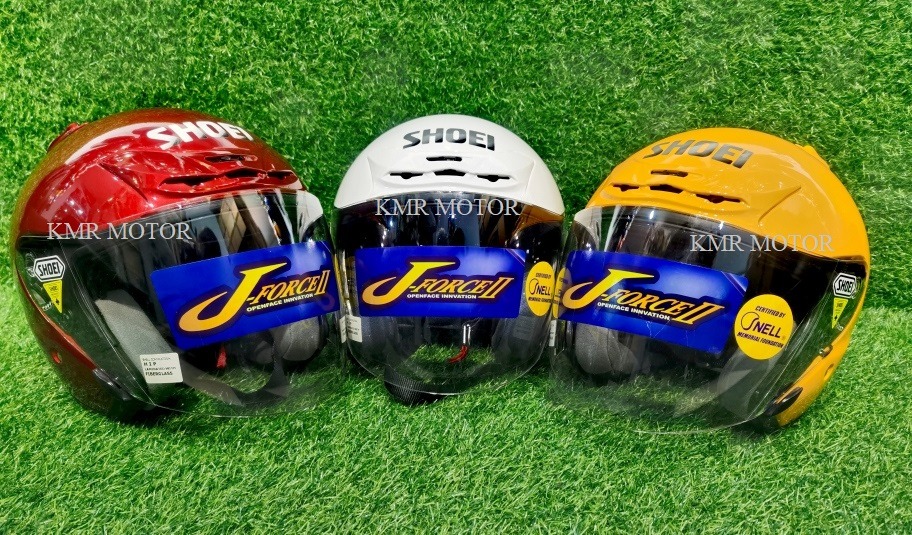
NEOTEC3 – Shoei's premium modular helmet, combining the convenience of a flip-up chin bar with full-face protection. A new graphic called VORYX was introduced in June 2026. It passes ECE 22.06 certification and comes in six sizes from S to XXXL.
Hornet ADV 06 – Shoei's flagship adventure helmet, updated to ECE 22.06 standards. Features revised ventilation with four front intakes and four rear exhausts, plus an internal ventilated center pad.
Z-8 – A compact, lightweight full-face helmet for sport riding. A new graphic called ORIGAMI2 was released in September 2025, featuring a striking folded-paper aesthetic.
J-O2 / EX-ZERO – Open-face and neo-retro designs. The J-O2 is a lightweight jet-style helmet with an enlarged sun visor. The EX-ZERO offers a classic off-road aesthetic for scrambler and cafe racer builds.
Arai: The Art of Impact Deflection
Arai helmets are distinctive for their signature "egg-shaped" shell, a design philosophy rooted in the belief that a smooth, rounded surface is best at deflecting impact energy rather than absorbing it all in one concentrated area. All Arai helmets are handcrafted exclusively in Japan.
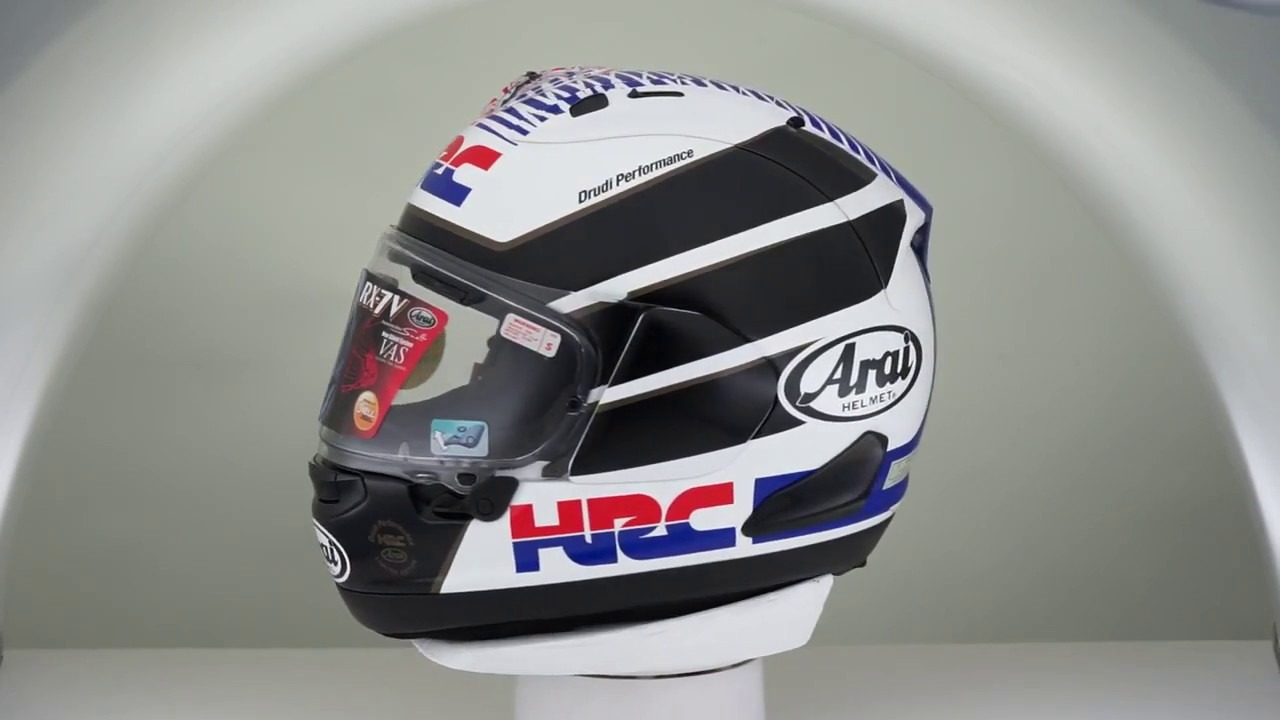
RX-7X / X-SNC – The RX-7X has long been Arai's premier full-face racing helmet. The X-SNC is a brand-new high-end street full-face model for 2026, achieving the highest ventilation efficiency and lightest weight in Arai's history while retaining the round, impact-deflecting shell.
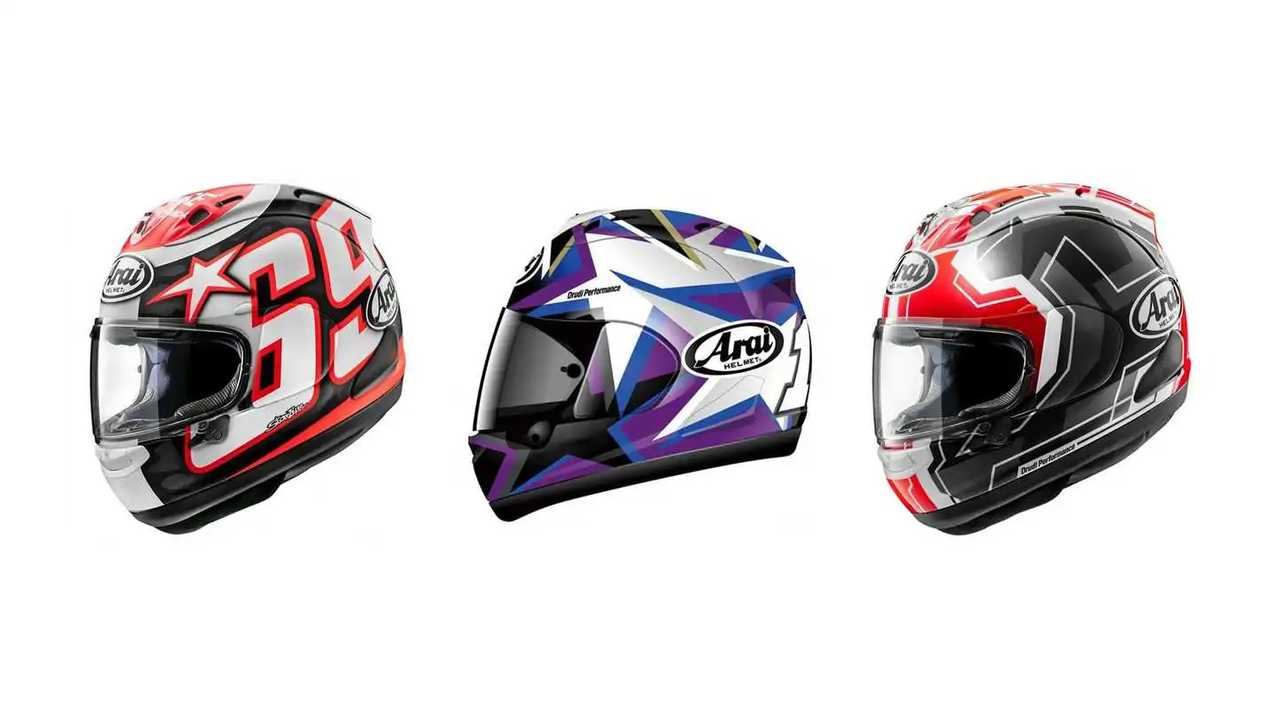
Quantic – Arai's entry into the sport-touring segment and the first Arai helmet to receive ECE 22.06 approval. One reviewer called it "the best of the Japanese manufacturer's new-generation helmets," combining touring comfort with sporty performance.
VZ-RAM / Rapide-Neo – Open-face and retro full-face models. The VZ-RAM has a lowered shield mounting point for smoother aerodynamics. A special edition Rapide-Neo HAGA DARK launches in July 2026.
OGK Kabuto: Aerodynamics and Value
OGK Kabuto (often simply called Kabuto) is the third major Japanese helmet manufacturer. While less internationally known than Shoei and Arai, it enjoys a strong following among domestic riders for its excellent value and engineering focus on aerodynamics.
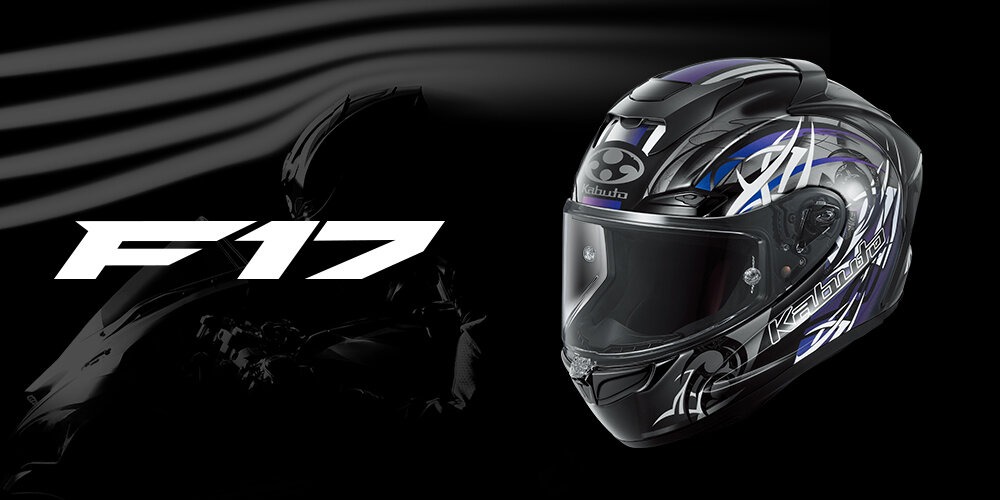
EXCEED-2 – Kabuto's premium 3/4 open-face helmet, beloved by commuters. Features the patented Wake Stabilizer fin that reduces head fatigue at highway speeds. The SAJ-3 shield blocks 99% of UV rays and 74% of infrared heat.
KAMUI-5 – An all-weather full-face helmet with IR-treated shield and large built-in drop-down sun visor. The dual-axis ratchet chin strap is easy to operate with gloves.
AEROBLADE-5 – A lightweight full-face sport model, sharing the Wake Stabilizer technology of the EXCEED-2.
Other Notable Japanese Brands
- Marushin – A historic Japanese brand specializing in retro-styled open-face and full-face helmets. Their Comet series is popular for classic bike owners.
- Nolan Japan – The Japanese arm of the Italian brand offers Japan-exclusive graphics and models tailored to local fit preferences.
- Suomy Japan – Produces racing-oriented helmets with Japan-specific interior shapes and unique SG/PSC certification.
Safety Certifications: What You Need to Know
When purchasing a helmet from Japan, understanding the certification system is essential. Helmets are regulated by Japan's Road Traffic Law and must bear specific certification marks to be legally used on public roads.
| Certification | Description |
| SG Mark | Basic safety standard for consumer products, managed by the Consumer Product Safety Association |
| JIS (T8133:2015) | More rigorous standard covering impact absorption, retention system strength, and field of vision; automatically qualifies for SG mark |
| PSC Mark | Required under the Consumer Product Safety Act; round PSC marks indicate compliance |
| MFJ Certification | Helmets that have passed JIS and are approved by the Motorcycle Federation of Japan; required for domestic racing |
| SNELL / ECE 22.06 / FIM | International standards; some Japanese-market helmets carry these, but SG or JIS marks are required for legal road use in Japan |
Note: For helmets to be legally sold and used on Japanese public roads, SG or JIS marks are required. Some high-end models may also carry ECE 22.06 or SNELL certification, and the latest racing lids may have FIM approval.
Sizing and Fit: JDM vs. International Models
Japanese Domestic Market (JDM) helmets are generally shaped to fit Asian head profiles, which tend to be rounder with a wider front-to-back ratio compared to the intermediate oval shape common in Western markets.
If you have a rounder head shape, a JDM-spec helmet may provide a noticeably more comfortable fit than a European or US model of the same brand and size. If you have a longer oval head shape, a JDM helmet may feel tight at the forehead and loose at the sides.
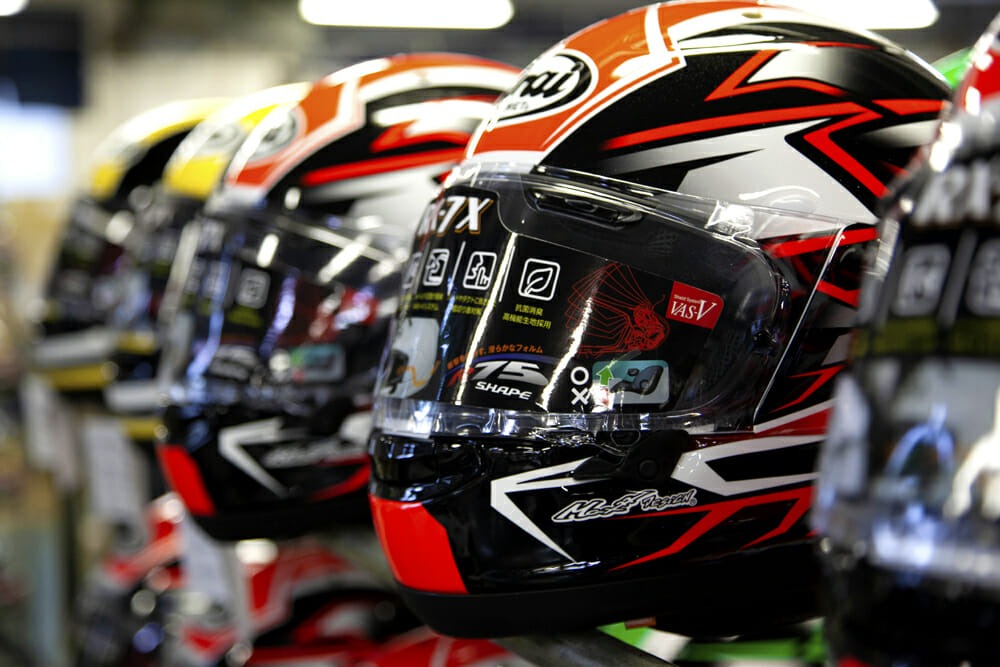
Some brands, particularly Arai, offer different interior pad thicknesses that can be swapped to customize fit. However, the fundamental shell shape of a JDM helmet is different from its international counterpart.
When buying from Japan, follow these steps:
- Measure your head circumference accurately in centimeters.
- Compare against the manufacturer's Japanese size chart.
- Read user reviews from riders with similar head shapes.
- Consider purchasing optional thicker or thinner comfort pads if the brand offers them.
Tips for Buying a Helmet from Japan
Understand your head shape before you buy. Japanese helmets are designed for rounder heads. If you have an intermediate oval or long oval head shape, you may need to try a different brand or size, or consider swapping interior pads.
Budget for shipping and customs. Helmets are bulky and require large shipping boxes. International shipping can cost anywhere from 3,000 to 8,000 JPY depending on the carrier and speed. Customs duties may apply in your country.
Check the certification for your country. ECE 22.06 is recognized in Europe and many other regions, but if you live in North America, you may need a DOT or SNELL-certified helmet. Some Japanese helmets carry dual certifications, but not all do.
Buy from reputable sellers. On platforms like Mercari and Rakuma, check seller ratings. On Surugaya and other professional retailers, items are inspected before listing. For high-value helmets, consider using Rakufun's photo verification service to confirm condition before shipping.
Consider buying a new visor or spare parts. Helmets bought from Japan may come with a clear visor only. If you need a tinted or mirrored visor, you can often order it from the same seller and consolidate shipping. Spare cheek pads and liners are also available.
Frequently Asked Questions (FAQ)
Q: Can I use a JDM helmet in my country?
A: It depends on your country's regulations. In Europe, ECE 22.06 is required. Many new Shoei and Arai models sold in Japan also carry ECE 22.06 certification. In the US, DOT certification is required – not all JDM helmets have DOT stickers. Check the certification before buying.
Q: How do I know my size in Japanese brands?
A: Measure your head circumference in centimeters. Japanese size charts are typically: S (55-56cm), M (57-58cm), L (59-60cm), XL (61-62cm). However, shape matters as much as size. Read reviews from riders with similar head shapes to yours.
Q: Why are Japanese helmets more expensive?
A: Japanese helmets use higher-grade materials, multi-layer composite shells, handcrafted assembly, and extensive wind tunnel testing. You are paying for safety research, quality control, and longevity.
Q: What is the difference between SG, JIS, and PSC?
A: SG is the basic safety mark. JIS is a stricter industrial standard that automatically qualifies for SG. PSC is required by law for helmets sold in Japan. All three indicate the helmet has passed impact and retention tests.
Q: How often should I replace my helmet?
A: Most manufacturers recommend replacing your helmet every 5 years, or sooner if it has been involved in an impact. The EPS liner degrades over time, even if the helmet looks fine from the outside.
Q: Can I buy a helmet from Japan and return it if it doesn't fit?
A: Returns are difficult and expensive due to international shipping costs. Most Japanese sellers do not accept returns for size-related issues. This is why understanding sizing and fit before purchasing is essential.
How to Buy Japanese Helmets with Rakufun
Many Japanese helmet retailers and individual sellers on platforms like Mercari, Rakuma, Surugaya, and Yahoo! Japan Auctions do not ship internationally. This is where Rakufun becomes invaluable. Rakufun is a proxy shopping platform available as both a website and a mobile app. It partners with dozens of Japanese online stores, handling domestic purchases and international shipping with 0% purchasing fees—you pay only for the items and shipping.
Step 1: Find your helmet
- Direct Search: Use Rakufun's built-in search to browse items from partnered platforms like Mercari, Rakuma, Surugaya, Rakuten, Amazon JP, and Yahoo! Japan Auctions. Search by brand and model—for example, "Shoei GT-Air 3" or "Arai X-SNC."
- Link2Buy Method: If you find a specific helmet on a Japanese website that does not ship internationally, copy the product URL and paste it into Rakufun's Link2Buy tool. You will need to manually enter the product name, specification, price (JPY), quantity, and domestic shipping fee.
Step 2: Place your order Add the helmet to your cart and proceed to checkout. Pay for the helmet and any domestic shipping fees. Rakufun then purchases the helmet on your behalf using their local Japanese address and payment methods.
Step 3: Warehouse arrival The seller ships your helmet to Rakufun's domestic warehouse in Japan. You will receive a notification when the package arrives.
Step 4: Consolidate multiple items Rakufun offers up to 90 days of free warehouse storage. If you are buying multiple items—for example, a helmet and a visor or a pair of gloves—you can wait until everything arrives and then combine them into one shipment. This saves significantly on international shipping costs.
Step 5: Choose international shipping and receive Select your preferred international shipping method: DHL (fastest), EMS (reliable), Air Freight (economical), or Sea Freight (slowest but cheapest for bulk orders). Rakufun professionally repacks your items to ensure they are secure for the journey, and you will receive a tracking number to monitor your package all the way to your doorstep.
Final Thoughts
Japanese motorcycle helmets represent a remarkable convergence of safety engineering, material science, and rider-centric design. Whether you are drawn to Shoei's innovative ECE 22.06-certified touring helmets, Arai's handcrafted egg-shell race lids, or OGK Kabuto's aerodynamic value, each brand offers a distinct approach to protecting your head while enhancing your riding experience.
When purchasing directly from Japan, pay attention to fitment differences between JDM and international models, verify the safety certifications that apply in your region, and plan for shipping and customs considerations. With Rakufun handling the logistics, the process is straightforward and affordable.